Protecting an Older Parent From Scams
Protect an older parent through agreed safeguards—alerts, freezes, trusted contacts, and a verification routine—without taking away control by surprise.
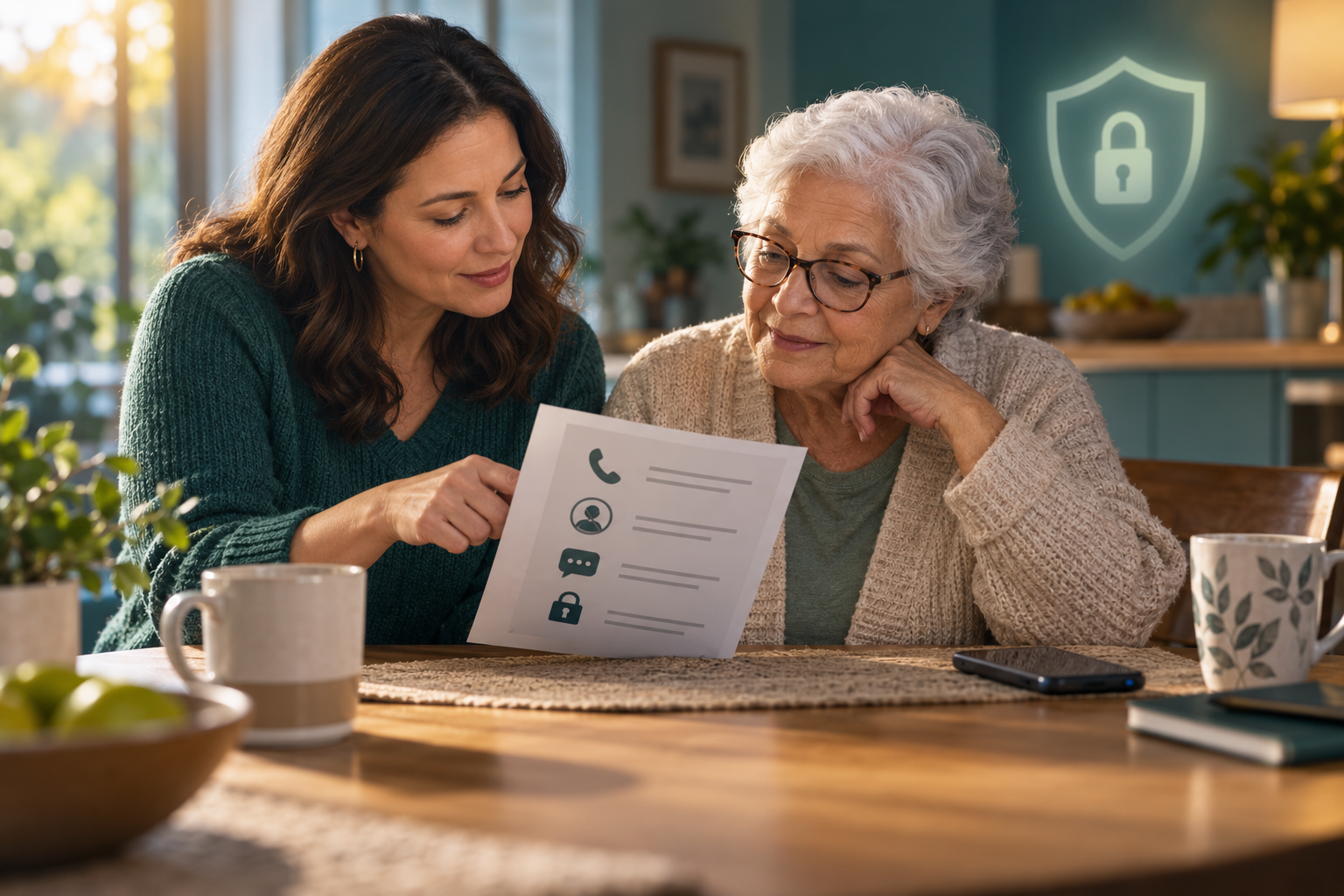
Scam protection works better when an older parent helps design the controls. Secretly restricting accounts can damage trust and make a future scam harder to discuss. Build a simple household rule instead: no urgent payment, account transfer, gift card, crypto purchase, or new investment is completed until a second trusted person is contacted through a known number. Add bank alerts, credit freezes when appropriate, carrier protection, and a trusted contact at financial institutions or brokerages that offer the feature. The goal is to create time and a second pair of eyes without treating age itself as proof that someone cannot manage money.
Begin with the scams that match the person’s real habits
Review how your parent receives money requests: phone calls, Facebook, WhatsApp, email, paper mail, or church/community contacts. A parent who never uses cryptocurrency needs a different plan from one who actively invests online. List the two or three highest-impact scenarios: grandchild emergency, government imposter, tech support, romance, investment, utility shutoff, or bank “safe account” call.
Create one sentence for each: “I do not pay gift cards to anyone who calls me,” “I call the bank number on my card before moving money,” or “I verify a family emergency by calling another relative.” Specific rules are easier to remember than a lecture about cybercrime.
Credit freezes are a quiet preventive control
If the parent is not frequently applying for new credit, freezing Equifax, Experian, and TransUnion can reduce the risk of fraudulent new accounts. Store the bureau recovery information securely and tell the parent exactly how a temporary lift works for a legitimate loan or apartment application. Do not substitute a paid monitoring subscription for the freeze simply because the service looks easier; monitoring usually alerts after a file changes.
If deposit-account fraud is a concern, consider the relevant specialty consumer reports as well. Use risk-based controls instead of freezing every report on a long CFPB list.
| Control | What it helps with | How to keep the parent in control |
|---|---|---|
| Bank transaction alerts | Shows unusual transfers, card use, or new payees quickly | Send alerts to the parent and, with permission, a trusted helper |
| Credit freezes | Reduces new-credit account opening | Keep lift instructions and credentials available to the parent |
| Trusted contact | Gives a financial firm someone to contact about suspected exploitation | Explain that a trusted contact does not automatically gain transaction authority |
| Family verification rule | Breaks grandchild, romance, and emergency-payment pressure | Use known callback numbers or a private family phrase |
| Carrier port protection | Reduces SIM-swap risk | Record how to remove the lock for a legitimate carrier change |
A trusted contact is not the same as a joint owner or power of attorney
Brokerages and some financial institutions let clients name a trusted contact. The institution may reach that person when it suspects exploitation or cannot reach the customer. A trusted contact generally does not automatically gain authority to trade, withdraw, or manage the account. That distinction can make the safeguard more acceptable to someone who wants help available without giving up control.
If a durable power of attorney or other legal authority is appropriate, discuss it separately with a qualified estate-planning attorney. Do not use a banking password share as an improvised substitute for legal authority.
Stop robocall and remote-access pathways where practical
Use carrier and phone spam-filtering features, but do not assume they block every spoofed caller. Remove unnecessary remote-access software and teach one rule: no one who calls unexpectedly gets control of the computer. Tech-support scammers often show harmless system messages and claim they prove infection. If genuine support is needed, start from the device maker, internet provider, or known local technician rather than a pop-up number.
For email and social accounts, enable strong MFA and unique passwords. A hacked Facebook account belonging to a real friend can send a much more convincing request than a random stranger.
- □ Agree on a “call someone first” rule for urgent transfers, gift cards, crypto, new investments, or secrecy requests.
- □ Freeze the three nationwide credit files if new-credit access is not frequently needed.
- □ Turn on bank and card alerts for transfers, new payees, and unusual spending patterns.
- □ Add a trusted contact where the financial institution supports it and the parent agrees.
- □ Secure phone carrier, email, and social accounts with unique credentials and stronger MFA.
- □ Keep a written list of verified bank, broker, insurer, family, and government contact numbers near the phone.
Data brokers can make impersonation more convincing
People-search sites can expose age, address, relatives, and phone numbers. Those details help scammers make a grandchild or government story sound personal. Prioritize opt-outs from sites that display the parent’s home address and family connections. California residents can also use the state’s DROP system to send deletion requests to registered data brokers. Deletion is not instant and legal exemptions exist, but reducing public exposure can make targeted social engineering harder.
When a scam attempt already happened, preserve dignity and evidence
Ask what the caller knew, what was sent, and whether credentials or remote access were provided. If money moved, contact the bank or payment service immediately. If account passwords were shared, secure the primary email and financial accounts. If identity documents or SSN were exposed, freeze credit and consider an IRS IP PIN. Avoid beginning with “How could you fall for this?” The priority is stopping the next transfer and learning which assets were exposed.
Know when financial exploitation needs professional intervention
Repeated unexplained transfers, a new “friend” controlling communications, sudden changes to estate documents, or inability to meet ordinary expenses can be signs of exploitation beyond an isolated scam call. Banks, adult protective services, law enforcement, elder-law attorneys, and medical professionals may have roles depending on the facts and local law. Use the least intrusive intervention that actually addresses the risk, and escalate when the person’s safety or capacity is in question.
A good plan preserves autonomy while adding friction to irreversible actions
The final system should feel ordinary: alerts run in the background, credit is frozen until needed, family verifies emergencies through known channels, and the parent knows who to call before sending irreversible money. Those small pauses defeat many scams because the criminal’s advantage is speed and isolation. Protection is strongest when the older adult understands and owns the plan.
Questions specific to Protecting an Older Parent From Scams
Should I take over my parent’s bank account to keep them safe?
Not automatically. Start with less intrusive controls such as alerts, trusted contacts, agreed verification rules, and freezes. Legal authority such as power of attorney is a separate decision that may warrant professional advice.
What is a trusted contact at a brokerage?
It is generally someone the firm can contact if it has concerns or cannot reach the client. Naming a trusted contact does not automatically grant trading or withdrawal authority.
Are credit freezes useful for older adults?
They can be very useful when the person rarely applies for new credit. Keep the lift instructions accessible so legitimate applications remain manageable.
How should I respond if my parent already lost money to a scam?
Focus first on stopping additional payments, contacting the financial institution, preserving evidence, and securing any exposed accounts or identity data. Shame delays reporting and can make a second scam more likely.